The Warning in Isaiah Everyone Ignores
A nation at the height of its wealth, one man saying no one can see the cliff — and a 300-year scholarly fight hiding a name that should be impossible.
Picture a nation at the very height of its wealth. Markets full. Temples busy. People comfortable, religious, and completely certain that everything is fine.

Standing in the middle of it is one man, saying something no one wants to hear: you are blind, and you cannot see the cliff you are standing on.
That man wrote a book. And for three hundred years, scholars have gone to war over a single question about it — one prophet, or three? Hidden inside that argument is a name that should be impossible, and a warning aimed directly at us.
A Book Split in Two
Isaiah is sixty-six chapters, the most quoted prophet in the New Testament, so saturated with the coming Messiah that ancient writers nicknamed it the fifth gospel. But read it straight through and something strange happens.
The first thirty-nine chapters feel like thunder — judgment, a holy God confronting a proud and comfortable people who have everything and perceive nothing. Then chapter forty turns the page, and the voice changes completely:
"Comfort, comfort my people, says your God. Speak tenderly to Jerusalem, and proclaim to her that her hard service has been completed."Isaiah 40:1–2
Judgment to rescue, in the space of a single page. That seam is exactly where the argument begins.
The Three-Hundred-Year Fight
The first half of Isaiah clearly lives in the eighth century BC, when Isaiah actually walked the earth. But the second half speaks as though it's standing inside a disaster that wouldn't happen for another hundred and fifty years — comforting people already exiled to a Babylon that hadn't conquered anyone yet in Isaiah's lifetime.
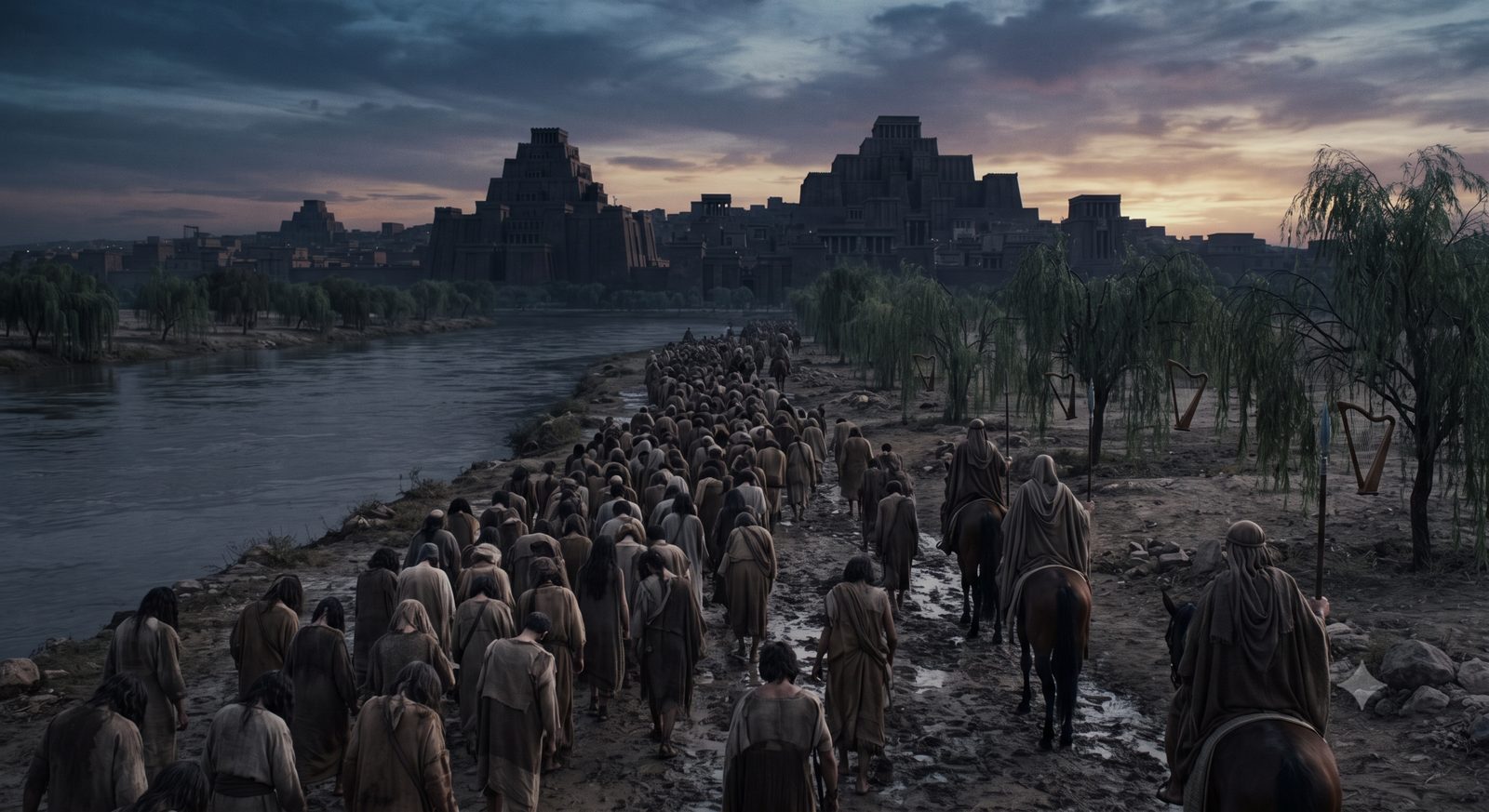
So in the 1700s, critical scholars proposed a bold idea: maybe there wasn't one Isaiah. A first Isaiah in the eighth century. A second, anonymous prophet writing from inside the exile. Perhaps a third, after the exiles came home. One scroll, possibly three voices, stretched across two hundred years.
Then comes the detail that turns the whole debate white-hot. In chapters 44 and 45, the prophet names — not describes, names — the king who will set the exiles free: Cyrus. A Persian king who wouldn't be born for roughly a hundred and fifty years.
To a skeptic, that's the smoking gun — history written backwards and dated early. To a believer, it's the entire point, because a few verses earlier God stakes His whole identity on exactly this kind of claim:
"I am God, and there is no other; I am God, and there is none like me. I make known the end from the beginning, from ancient times, what is still to come."Isaiah 46:9–10
So Which Is It?

Honestly — I'm not going to pretend this is settled, because it isn't. The multiple-author theory isn't an attack invented by people who hate the Bible. It rests on real observations: a change in setting, in style, in where the writer seems to be standing in history. Serious, faithful scholars land on both sides.
And here's what a lot of videos on this topic love to smuggle past you, which I won't do: people will tell you the Dead Sea Scrolls prove Isaiah predicted everything. They don't.
In 1947, a shepherd near the Dead Sea threw a stone into a cave and heard pottery shatter. Inside were the greatest manuscript discoveries in history — including a single scroll, twenty-four feet long, containing the entire book of Isaiah, copied around 125 years before Christ. A full thousand years older than any Hebrew Isaiah we'd held before.

Here's what that scroll does prove: the text had barely changed in a thousand years, and every word of chapter 53 — the chapter that reads like an eyewitness report of a crucifixion — was already there, more than a century before Jesus was born. No Christian could have slipped it in later.
Here's what it doesn't prove: whether one man or three wrote the book centuries earlier. The honest scholar holds both truths at once. Most videos only tell you the half that sells.
The Servant Who Sounds Like Someone
Set the authorship question down for a moment, because it doesn't touch the thing that should actually stop your breath.
In the heart of the second half of Isaiah sits a poem about a servant — despised and rejected, pierced for wrongs that weren't his own, silent before the people who killed him, buried with the rich in his death. Written, at the very latest, 125 years before Jesus. By most reckonings, centuries earlier.
"He was pierced for our transgressions, he was crushed for our iniquities; the punishment that brought us peace was on him, and by his wounds we are healed."Isaiah 53:5
"He was oppressed and afflicted, yet he did not open his mouth; he was led like a lamb to the slaughter."Isaiah 53:7
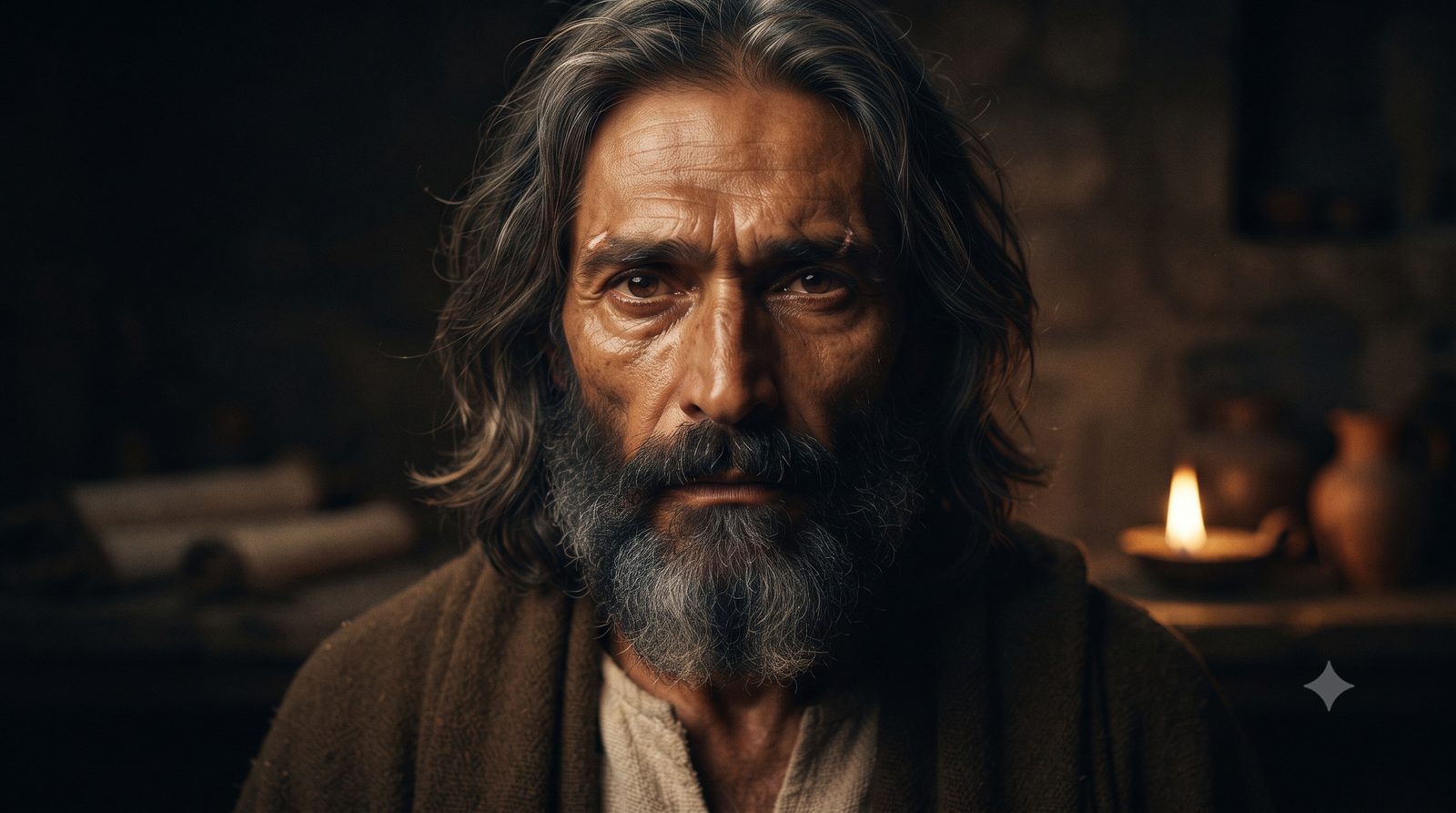
Jewish tradition has long read this suffering servant as the nation of Israel itself, wounded among the nations. Christians read it as one man — one Messiah. That's a real, ancient, and respectful disagreement. But read chapter 53 slowly, and ask yourself who it sounds like.
Centuries later, a man named Philip met a stranger on a desert road, reading this exact chapter, completely bewildered by it. The stranger asked the only question that really matters — who is the prophet talking about? — and Philip, beginning with that very passage, told him the good news about Jesus (Acts 8:34–35).
Not Written in the Third Person
Chapter 53 was never meant to stay a lecture. Read the way the church has always read it, and it becomes unbearably personal. Despised, so you would be embraced. Pierced, for the thing you still can't forgive yourself for. Crushed, under the weight you were so sure you'd carry alone forever.
The punishment that brought you peace was on him. And by his wounds — not your effort, not your record, not your years of trying harder — you are healed.
The Warning Underneath It All
Go back to the day Isaiah was called, in a temple filled with smoke and burning light. God gives him a message that sounds almost cruel:
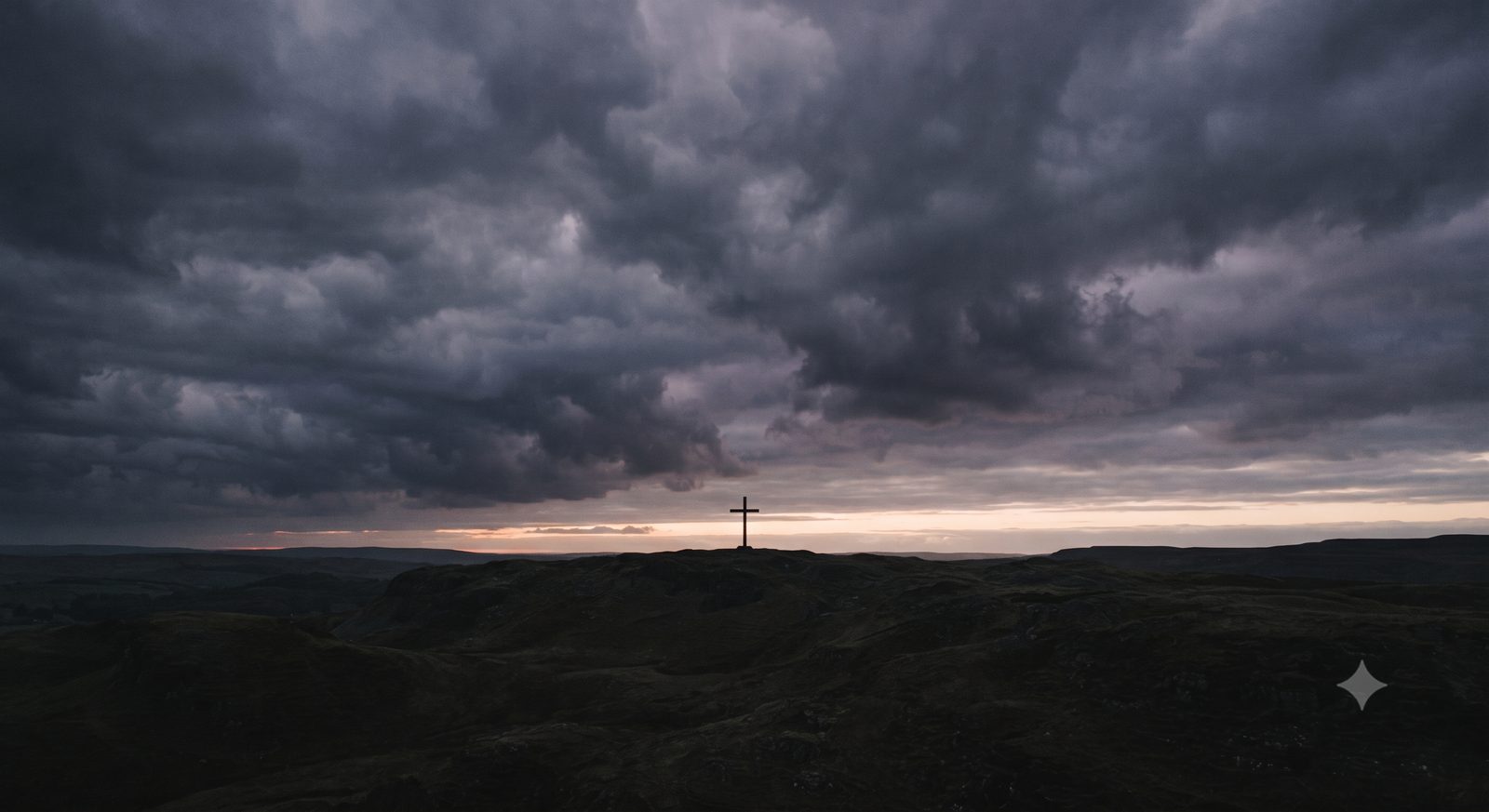
"Go and tell this people, be ever hearing, but never understanding; be ever seeing, but never perceiving."Isaiah 6:9–10
Isaiah was sent to a nation that had everything and still couldn't see what was coming — not because they lacked eyes, but because they were comfortable. Comfort, Isaiah warned, is its own kind of blindness.
Seven centuries later, Jesus picks up that exact warning. A rich man's land produces so much he tears down his barns to build bigger ones. Relax. Eat, drink, take life easy, he tells himself. And God says, you fool — this very night, your life will be demanded of you.
Then Jesus turns to his followers and says the words Isaiah himself could have written:
"Keep your lamps burning, like servants waiting for their master to return. You also must be ready, because the Son of Man will come at an hour when you do not expect him."Luke 12:35–40
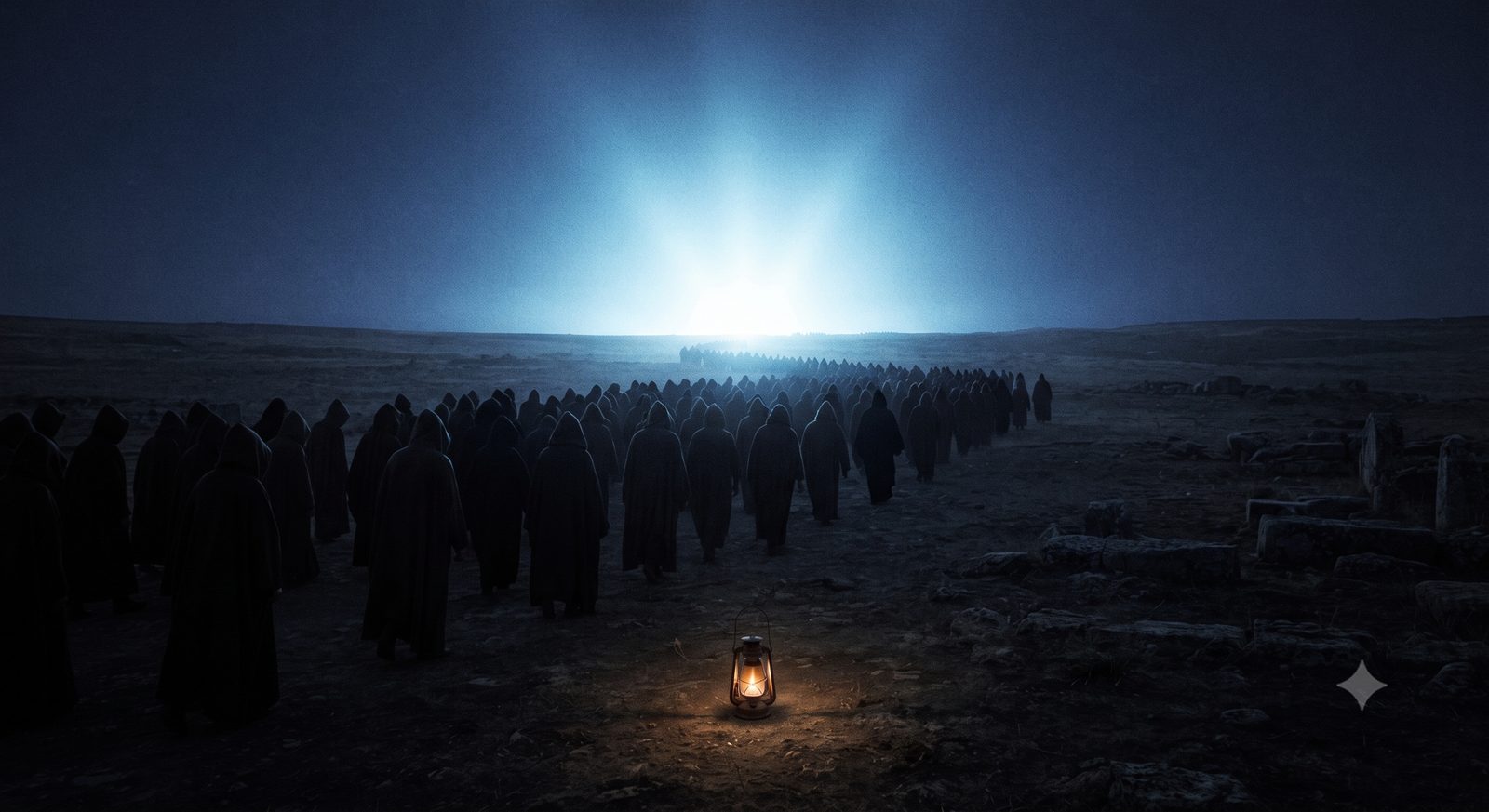
"You know how to interpret the appearance of the earth and the sky. How is it that you do not know how to interpret this present time?"Luke 12:56
The very same blindness. Not a blindness of the eyes — a blindness of the comfortable heart.
It Curves Back to Us
Paul takes Isaiah's warning and aims it somewhere no one expects — straight at the confident believer. In Romans, he quotes Isaiah word for word: God gave a people eyes that would not see. Then he turns to everyone who feels spiritually secure, everyone grafted in, and says something sharp:
"Do not be arrogant, but tremble. For if God did not spare the natural branches, he will not spare you either."Romans 11:20–21

The warning was never only for one ancient nation. It curves back around — to us. To the comfortable. To the certain. To the ones absolutely sure that they, at least, can see clearly.
Paul adds one more warning to the Thessalonians: before the end, a deception will come so convincing that many will believe it without a second thought. Notice what his counsel is not. He doesn't say panic. He doesn't say hunt for signs in the sky or guess at dates. He says:
"Do not let anyone deceive you in any way."2 Thessalonians 2:3
Stay awake. Stay humble. Keep your eyes open.
Part One of Two
This is where the warning stands: from Isaiah, through Jesus, through Paul, one thread — the quiet danger of growing so comfortable, so certain, so at ease that you simply stop watching. Isaiah's people didn't fall because they were monsters. They fell because they were comfortable, and couldn't imagine for a second that they might be wrong.
But a warning is not a threat. A threat wants you afraid; a warning wants you ready. The prophet didn't thunder because he hated his people — he thundered because he loved them.
That love is the whole of Part Two. Keep your lamp burning.
Proof & Gospel. Keep asking.
New writing every weekday, and a chapter of Scripture every morning.
Get The Morning Proof