The names they said were invented — and then dug up
David was supposed to be a legend, like King Arthur. Pilate a convenient villain. Then the ground gave up the very names it was said to have invented — in enemy stone.
For most of the twentieth century, a confident claim ran through parts of biblical scholarship: the Old Testament's world was largely invented. Its kings were legends, its cities were fictions, its named figures were the imaginative furniture of a story written centuries after the fact. King David, some argued, was as historical as King Arthur — a folk hero with no more archaeological reality than Camelot.
It was a reasonable position, given the evidence available at the time. The trouble is what happened next. Again and again, the ground gave up the very names it was said to have invented.
This is not an argument that archaeology proves the Bible true. It cannot, and this essay will say so plainly more than once. What it can do is something narrower and stranger: it keeps producing the specific people and places that were confidently declared fictional — and it does so with inscriptions in stone that no believer could have planted.
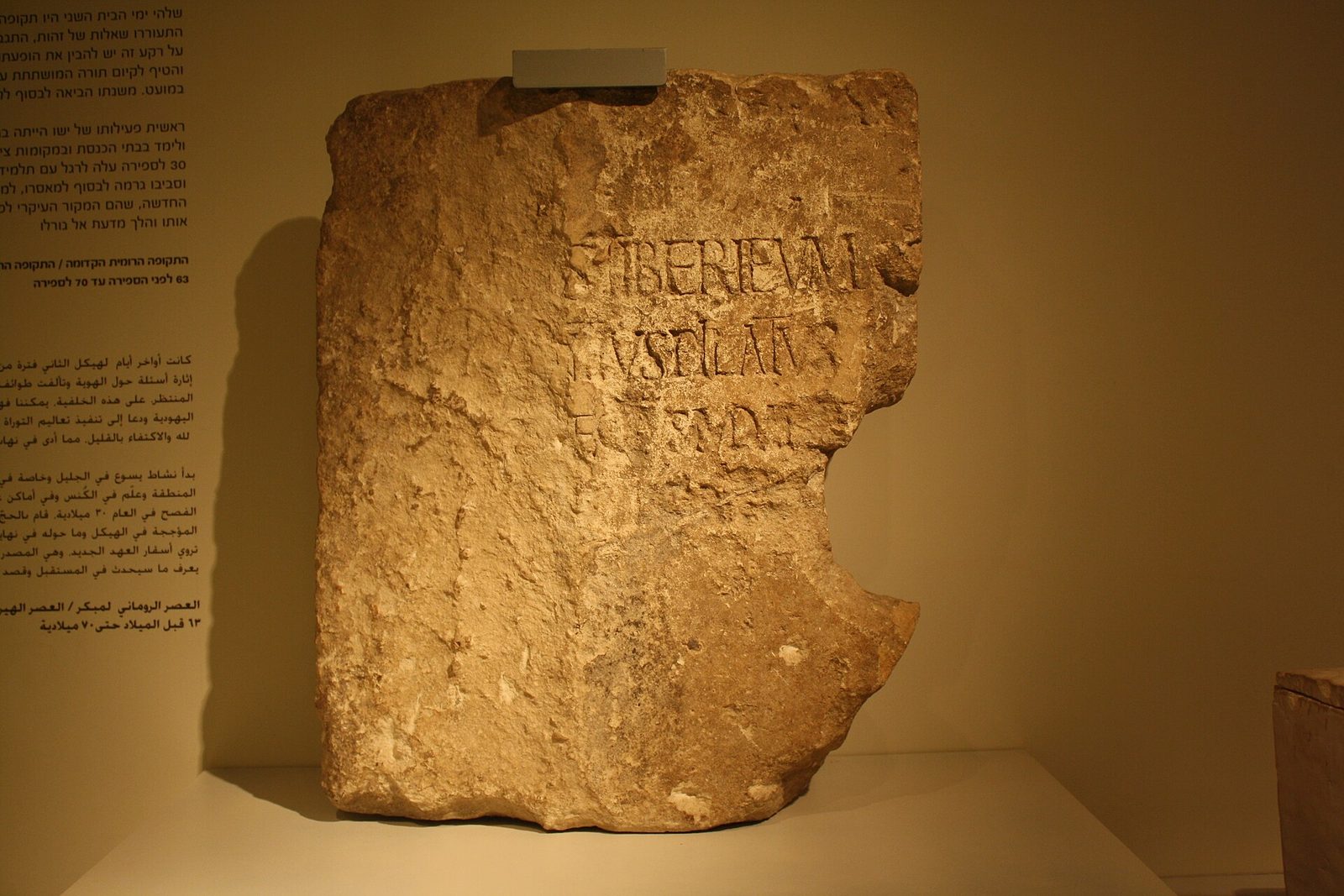
The prefect who "never existed"
Start with the most famous example, because it is the cleanest. Pontius Pilate is named in all four Gospels as the Roman official who condemned Jesus. For centuries, the only sources for Pilate were literary — the Gospels, a couple of lines in Tacitus and Josephus — and skeptics noted, fairly, that no hard evidence placed him in Judea at all. Some went further: perhaps he was a narrative invention, a convenient villain.
Then, in 1961, an Italian team excavating the theatre at Caesarea Maritima turned over a block of limestone that had been reused as a step. On its face, in Latin, was a dedication naming Pontius Pilatus, Prefect of Judea. Contemporary with his own lifetime. Carved while he governed. The man critics had wondered about was suddenly, undeniably, a figure in stone.
Notice what this does and does not settle. It does not prove that Pilate condemned Jesus, or that any Gospel scene happened as written. It proves that the specific official the Gospels name, in the specific role they assign him, in the specific province they place him, was real. The burden of the "invented villain" theory collapsed under a single reused step.
The house they said was a fairy tale
The sharper case is David, because the stakes were higher. If David was legend, the entire monarchy at the heart of the Old Testament wobbles. And through the 1980s a school of thought argued exactly that — no contemporary evidence named David, so the united monarchy was likely a later myth.
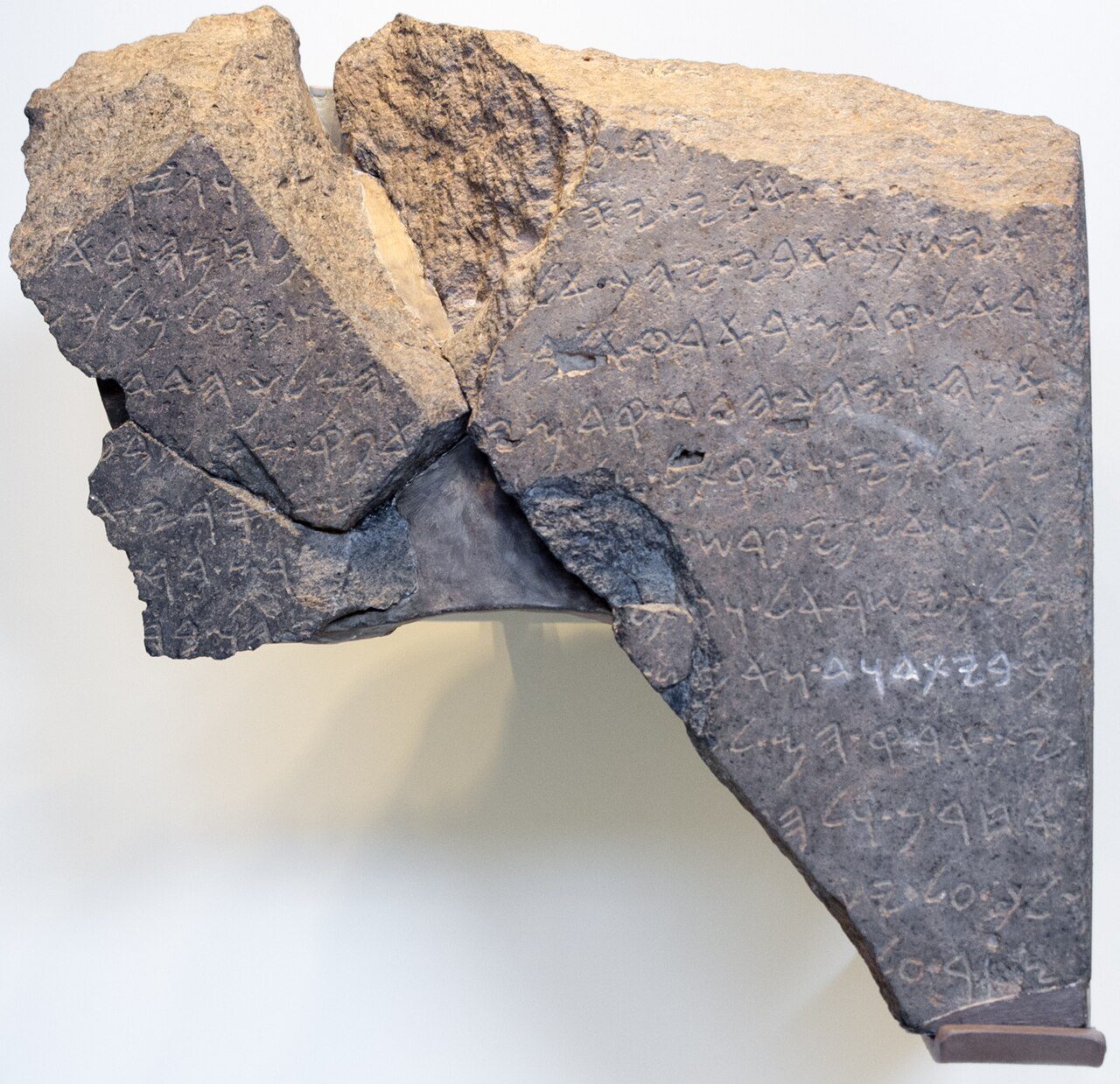
In 1993, at Tel Dan in northern Israel, an archaeologist named Gila Cook noticed writing on a broken piece of basalt in a wall. It was a fragment of a victory monument, erected by an enemy of Israel around a century after David, boasting in Old Aramaic of killing an Israelite king — and it referred to that king's dynasty as the House of David.
An enemy inscription. Written by people with no interest in flattering Israel. Naming David's dynasty as an established royal line barely a century after he lived. It is hard to overstate how much this single stone changed the conversation. The name that was supposed to be a fairy tale was being used, matter-of-factly, by a hostile king who assumed everyone knew whose house he meant.
Again, the honest limit: the Tel Dan Stele does not prove the David of the Bible did everything the Bible says. It proves there was a David, that he founded a dynasty, and that his royal house was a known fact to Israel's enemies within living memory of his descendants. The "King Arthur" comparison did not survive it.
The tunnel under the story
Sometimes it is not a name but an engineering project that surfaces. The book of Kings describes King Hezekiah, facing an Assyrian siege around 700 BC, cutting a tunnel through solid rock to bring the Gihon spring's water safely inside Jerusalem's walls.
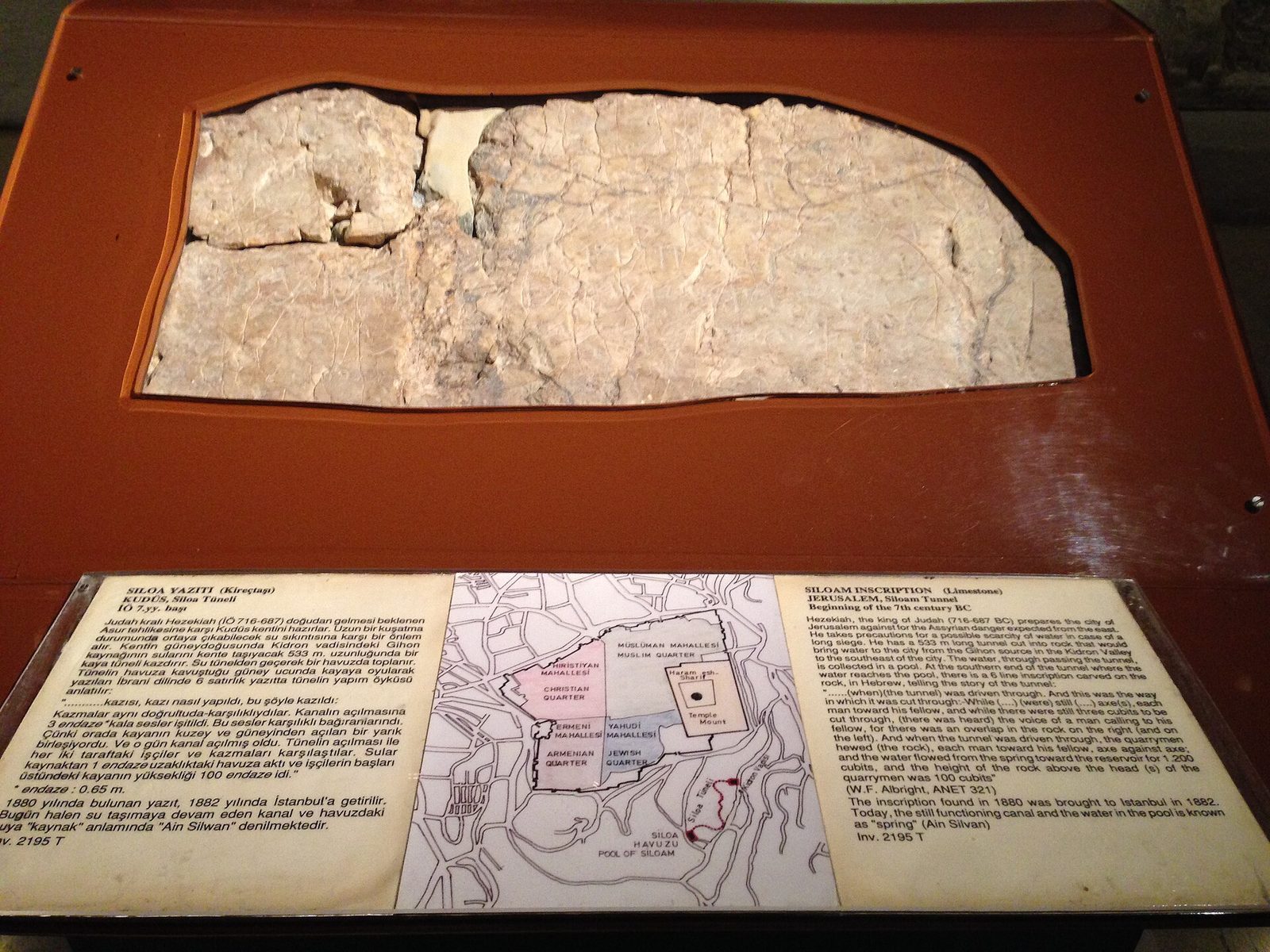
Hezekiah's Tunnel is still there. You can wade through its 1,750 feet today. And in 1880, boys playing near its southern end found an inscription carved into the wall — six lines of ancient Hebrew, describing the dramatic moment two teams of diggers, working from opposite ends, heard each other's picks through the rock and met in the middle. The letters date to exactly Hezekiah's era. The tunnel the Bible describes is not a literary flourish. It is a place, with a contemporary inscription, that you can walk through in the dark.
What the pattern means — and what it doesn't
By now the shape of the thing is clear, and so is the temptation. It would be easy to overclaim here, to say the stones prove the book. They do not, and pretending otherwise is exactly the move that gets this whole line of argument dismissed by serious people.
Here is the careful version. Archaeology can confirm that a person existed, that a city stood where the text says, that a king reigned, that a building was built. It cannot confirm a miracle, or the presence of God, or the meaning of any event. A tunnel proves a tunnel. An inscription proves a name. Neither proves a theology.
But that careful version is still devastating to one specific claim — the claim that the Old Testament is a late fiction, populated by invented people in invented places. That claim made testable predictions: these names will never be found, because they were never real. The predictions were run against the ground for a century. The ground kept answering back with the names.
The skeptic can still say: fine, the setting is historical, the people are real, but the supernatural claims are false. That is a coherent and serious position, and it is the one the honest doubter should hold rather than the "it's all myth" version the evidence retired. The argument has simply moved — from "did these people exist" to "what do we make of the people who did." Which is exactly where it should be.
The names they said were invented keep coming out of the dirt. That settles less than an apologist wants and far more than a skeptic once expected. It clears the ground of a bad argument, and leaves you standing in front of the real question — the one no inscription can answer for you.
New writing every weekday, and a chapter of Scripture every morning.
Get The Morning Proof