The air you breathe
The values you think are simply obvious — human equality, the worth of the weak — would have baffled a first-century Roman. They came from somewhere. Most people never notice.
Try a thought experiment before you decide what you already believe. Picture yourself explaining to an educated Roman of the first century — a Stoic, say, cultured and humane by the standards of his world — that the weak have exactly the same worth as the strong. That a slave is the moral equal of a senator. That power carries an obligation to protect the powerless rather than a right to use them. That the measure of a society is how it treats its lowest members.
He would not have disagreed with you. He would not have understood you. You would have sounded to him like someone insisting that up is down.
The water you cannot see
The values most modern people treat as simply obvious — human equality, the special dignity of every individual, the duty of the powerful to the weak — feel to us like the natural conclusions of any reasonable mind. We assume that once superstition cleared away, these truths were simply there, waiting to be seen.
They were not there. For most of human history, in most places, the opposite was assumed. The strong ruled because they were strong, and this required no more justification than the weather. Infants were exposed on hillsides. Conquest was glory. The gods sided with the victors. Nothing in nature or reason objects to any of this — which is precisely why the ancient world, for all its philosophy, did not object to it either.
This is the uncomfortable part, and it is worth stating plainly because the people who state it most forcefully are not always believers. The historian Tom Holland, who does not write as a conventional Christian, spent his career among the Greeks and Romans he loved — and slowly realized their values were not his own.
To live in a Western country is to live in a society still saturated by Christian concepts and assumptions. — Tom Holland, *Dominion*
His conclusion, argued across six hundred pages, is that the moral instincts modern secular people are proudest of are not universal and were not discovered by reason. They are the inheritance of a specific revolution — one that began with an executed provincial and the strange conviction that he was worth worshipping.
The reversal
Rome crucified people to make a point, and the point was hierarchy. Crucifixion was reserved for slaves and rebels, a public spectacle of what happens to those at the bottom. It was the most shameful death the ancient imagination could devise.
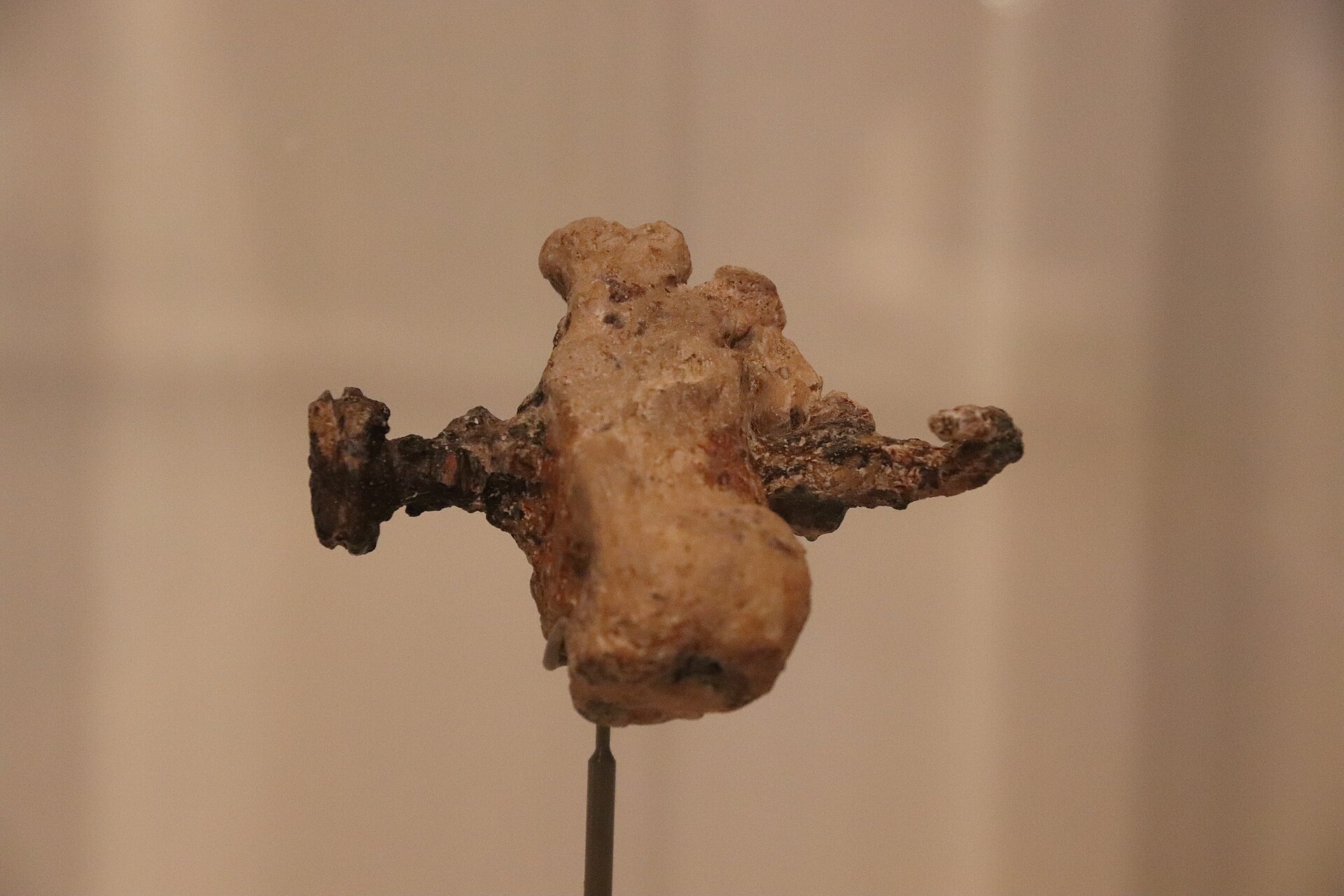
So there is something genuinely upside-down about a movement that took the cross — the empire's instrument for degrading the powerless — and made it the center of worship. The claim was not merely that a good man had died unjustly. It was that God himself had chosen the position of the slave, the victim, the one the world discards. That the creator of the universe was to be found not with the strong but with the crucified.
Follow that conviction outward and you get consequences the first believers themselves did not fully anticipate. If the lowest person carries the image of God, then the lowest person cannot simply be used. The idea takes centuries to work through a civilization — haltingly, hypocritically, resisted at every turn, often by the church itself. But it does not stop working.
The last will be first, and the first last. — Matthew 20:16
The argument that cuts both ways
Here is where honesty demands a hard admission, and making it is the difference between an argument and a sermon.
None of this proves Christianity true. That a set of ideas transformed the world does not mean the ideas are correct, or that their source is divine. Powerful falsehoods have remade societies too. A skeptic can accept every historical claim in this essay and still conclude that Christianity was an influential human movement and nothing more. That is a coherent position, and it should be met with respect rather than a rhetorical trick.
There is also the church's record, which is not clean. The same institution that carried these ideas also blessed conquests, owned slaves, burned dissenters, and repeatedly betrayed the man at its center. Any honest account has to hold both: the revolution and the treachery, often in the same century, sometimes in the same person.
But notice what the critic must borrow to make the accusation. When we condemn the Crusades, the Inquisition, the church's complicity in slavery, we do it by appeal to compassion, to human dignity, to the wrongness of the strong crushing the weak. We are using the tools the revolution handed us. Even the case against Christianity is usually argued in Christianity's own moral vocabulary — which is a strange thing to be true of a worldview one has supposedly left behind.
Nietzsche saw this with total clarity, and hated it. He understood that you could not quietly keep Christian ethics after discarding Christian belief — that the compassion, the concern for the weak, the horror at cruelty were not neutral common sense but the specific fruit of a specific faith. He wanted them gone along with the God who grounded them. His contemporaries thought him mad. He may only have been early.
What the essay does and does not claim
Not that Jesus personally designed democracy, or that Christians have a monopoly on kindness, or that no other civilization ever valued mercy. Those would be easy to disprove, and overclaiming is how this argument gets discredited by its own advocates.
The claim is narrower and harder to shake. It is that a cluster of moral convictions now so widespread they seem like the air itself — the equal worth of every human being, the duty owed to the weak, the conscience of the individual against the crowd — entered the Western world through a particular door, and that the door was the belief that God was crucified.
You can breathe air without knowing its chemistry. You can inherit a fortune without knowing who earned it. And you can hold a set of values with total conviction while being entirely mistaken about where they came from.
The invitation here is not to believe. It is only to notice the water — and then to ask the honest question the noticing forces. If these values are true, and not merely useful, what kind of world would have to be the case for them to be true? A world of matter and force and the survival of the strong does not obviously produce the conviction that the strong owe everything to the weak. That conviction had to come from somewhere.
It is worth finding out where.
New writing every weekday, and a chapter of Scripture every morning.
Get The Morning Proof